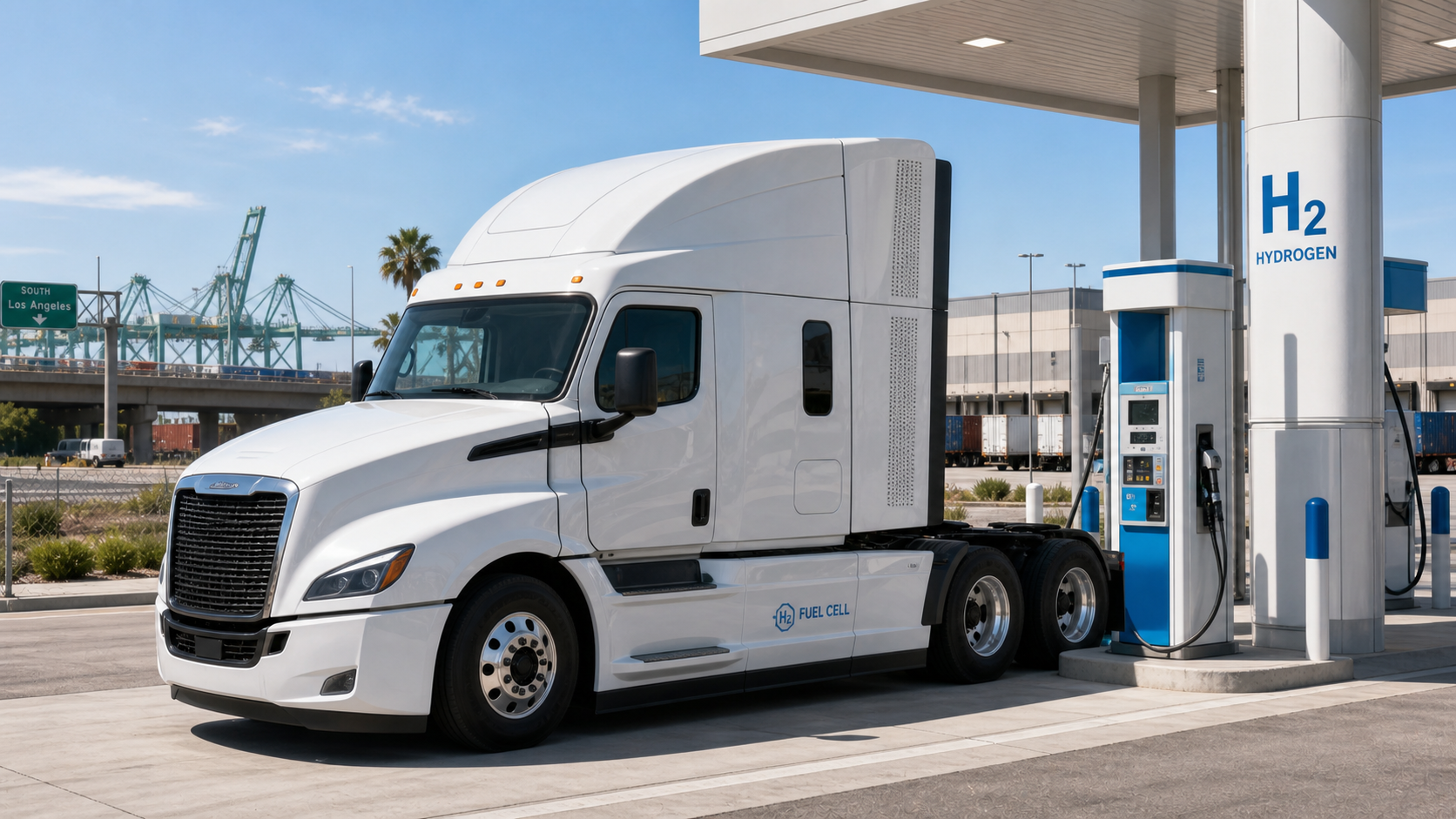
Toyota is putting another stake in hydrogen for heavy-duty trucking, this time with Hyroad in Southern California. Toyota says the companies have a definitive agreement covering vehicles, fueling, and logistics support.
Electrive reports that Toyota Motor North America and Hyroad Energy plan to deploy 40 hydrogen fuel-cell Class 8 trucks in the region. The story is not about passenger EVs, but it does show how zero-emission transportation is being tested beyond personal vehicles.
What the project includes
The plan centers on 40 hydrogen fuel-cell Class 8 trucks in Southern California. Toyota's official release supports the deployment count and says the collaboration includes fueling and logistics support, not just the vehicles themselves.
That full-system approach matters because heavy-duty hydrogen trucks depend on more than truck availability. Operators need dependable fuel, maintenance support, route planning, and uptime that can compete with diesel operations.
Why Southern California matters
Southern California is a major freight region, with ports, warehouses, rail links, and highway corridors that move goods across the country. Heavy diesel traffic affects air quality in communities near those routes.
A zero-emission truck deployment will not clean up the freight system on its own, but it can test whether hydrogen fuel-cell trucks can handle routes and duty cycles that are difficult for some battery-electric setups today.
Hydrogen versus battery-electric
The project also shows that different technologies are being tried for different jobs. Battery-electric trucks are gaining ground in some depot-based and regional routes. Hydrogen fuel-cell trucks are still being pitched for longer duty cycles, faster refueling, or heavier operations where charging downtime may be harder to manage.
The market will decide based on cost, fuel availability, reliability, maintenance, and emissions performance. Fleet operators are unlikely to care about the technology label if the truck cannot run routes efficiently.
What to watch next
The key questions are execution and scale. Can Hyroad and Toyota keep the trucks fueled, serviced, and productive? Can hydrogen supply expand beyond a limited deployment? Can the economics make sense without depending on one-off support?
For consumers, the impact is indirect. Cleaner freight could reduce diesel exposure over time, while successful fleet projects may help define where hydrogen belongs alongside battery-electric trucks.