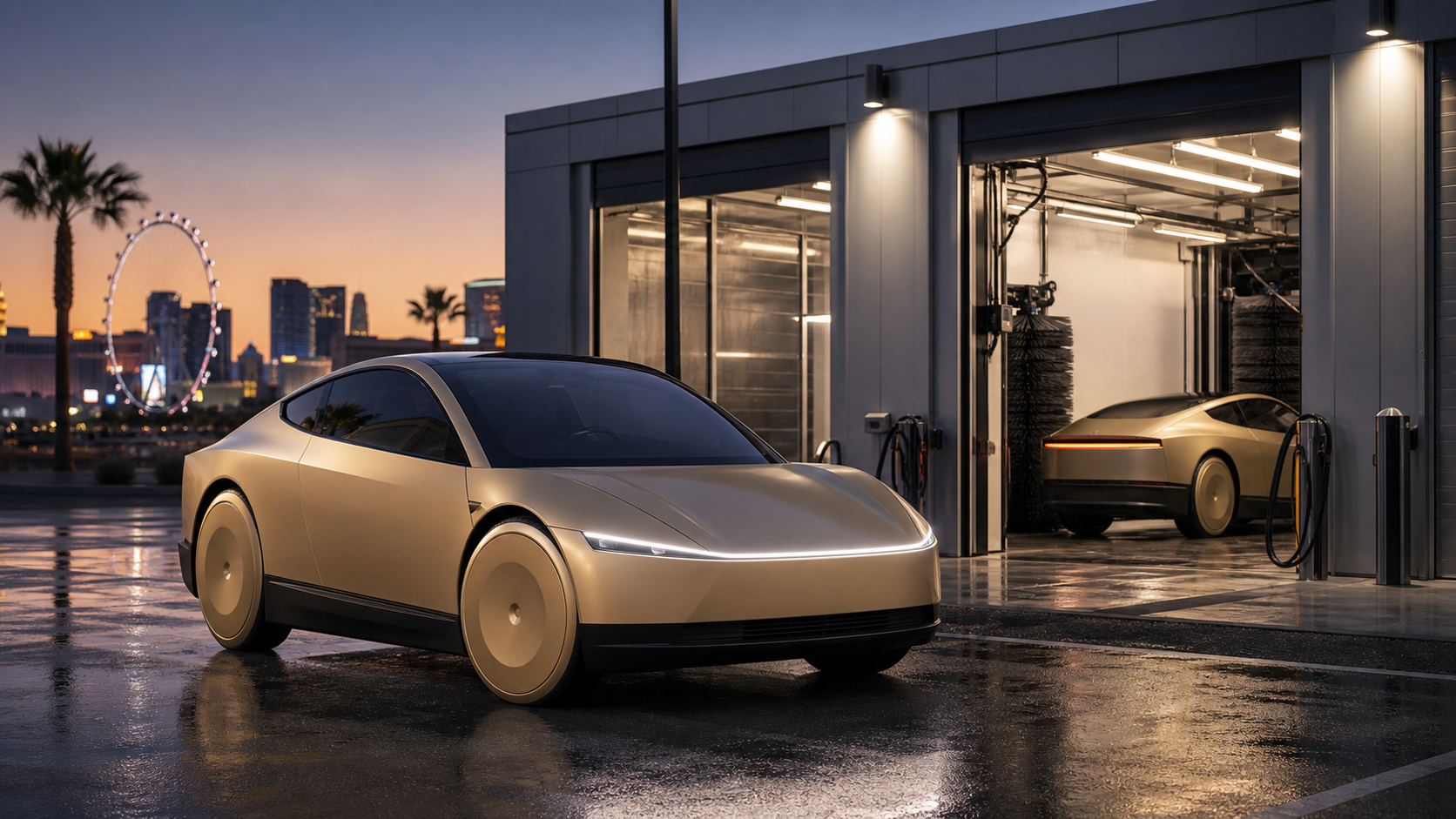
Tesla's latest Cybercab-related filing is not about a showroom model. It is about the less glamorous infrastructure that a robotaxi fleet would need before it can operate at scale.
Reports from Teslarati and Not a Tesla App point to a Clark County, Nevada permit filed on May 12, 2026, for work described as the Tesla Center Mohawk Cybercab Phase 2 Car Wash at 6170 Mohawk St. in Las Vegas. The filing suggests Tesla is preparing support operations around Cybercab rather than announcing a customer vehicle or a public service launch.
What the filing suggests
The reported permit language matters because autonomous ride-hailing is not just a software problem. A fleet of driverless vehicles has to be cleaned, charged, staged, inspected, and returned to service repeatedly throughout the day.
A dedicated car-wash or support facility fits that operating model. It could help Tesla handle vehicle turnaround, keep cabins presentable for passengers, and centralize some of the daily maintenance that a high-use fleet would require.
What it does not confirm
The filing does not confirm that Cybercab rides are available in Las Vegas. It also does not confirm pricing, service boundaries, regulatory approval, passenger access, or whether the vehicles would operate with or without human oversight.
That distinction is important for shoppers. Tesla has shown Cybercab as part of its autonomous-vehicle strategy, but a facility permit is not the same as a production launch or a consumer sales plan.
Why support infrastructure matters
Robotaxi services need physical logistics. Even a highly automated vehicle still needs somewhere to charge, somewhere to be cleaned, and a process for handling faults, inspections, repairs, and customer-service issues.
That is why support sites can be a useful signal. If Tesla keeps adding local facilities, charging capacity, cleaning systems, and fleet-staging areas, it would suggest the company is working on the operational side of Cybercab, not just the vehicle concept.
What shoppers should watch
For EV buyers, this does not change any purchase decision today. The more useful items to watch are public ride availability, local permits, safety reporting, service-area limits, and whether regulators allow unsupervised commercial operation.
If Cybercab becomes a managed mobility service rather than a conventional consumer vehicle, shoppers may never compare it directly with a Model 3 or Model Y. Its impact would show up instead in ride-hailing availability, urban charging infrastructure, and Tesla's long-term product direction.