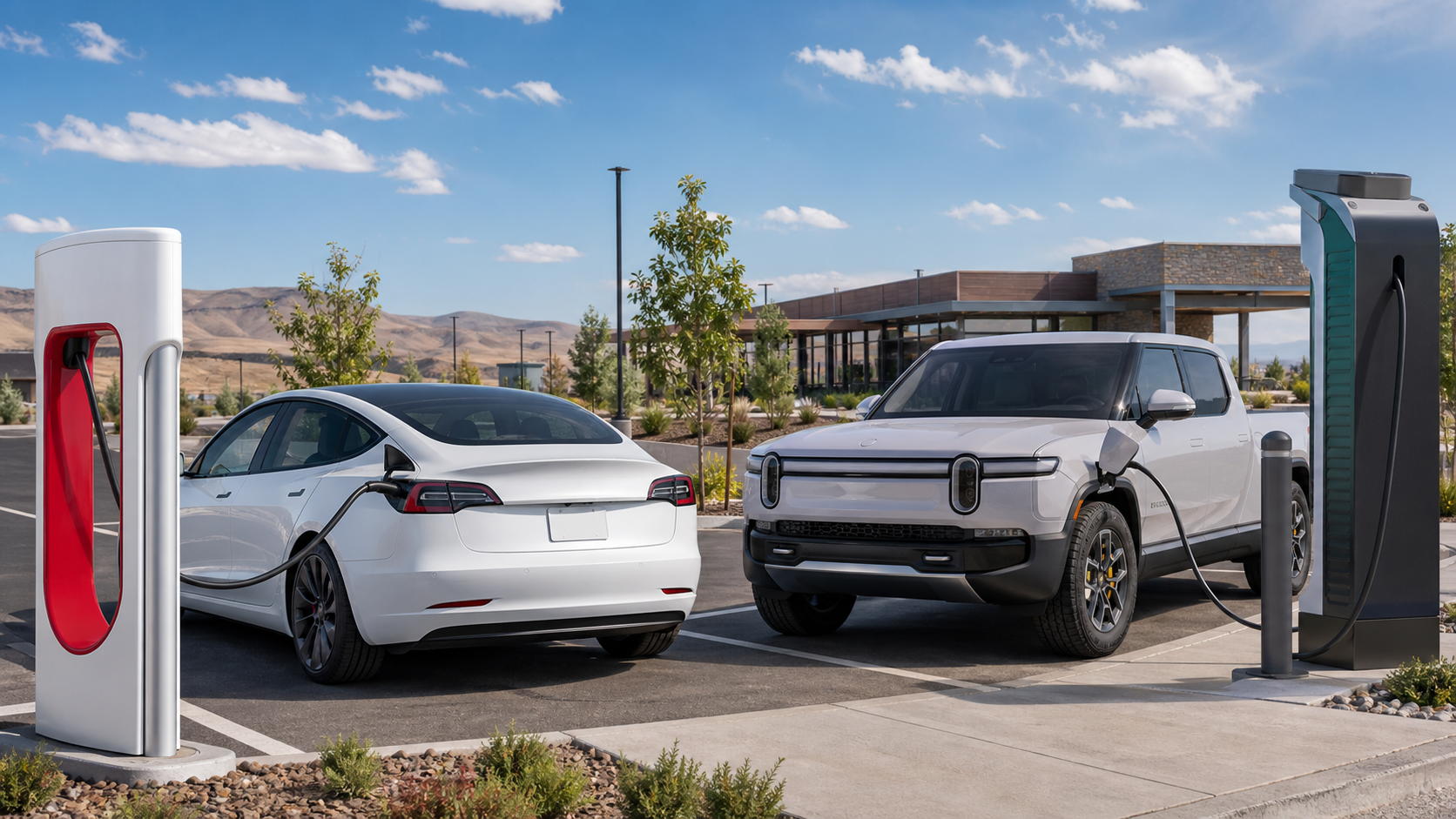
Charging reliability is still one of the biggest differences between owning one EV and owning another. Green Car Reports says Tesla and Rivian charging networks had far fewer owner-reported problems than several third-party charging networks in Consumer Reports-related coverage.
That does not mean every buyer should choose only a Tesla or Rivian. It does mean shoppers should evaluate charging access with the same seriousness they give range, price, cargo space, and incentives.
What the survey coverage found
Green Car Reports reported that charging networks operated by Tesla and Rivian stood out with fewer owner-reported problems than several non-automaker networks. TechCrunch covered the same Consumer Reports survey context and also described Tesla and Rivian as leaders on reported reliability.
The exact ranking matters less for shoppers than the broader pattern. Owners notice when chargers work, when payment starts cleanly, when plugs are available, and when the app tells the truth about site status. Those details shape the ownership experience every time a driver leaves home-charging range.
Why reliability can outweigh plug count
Public charging is often discussed in terms of total plugs, but a broken, blocked, slow, or unavailable stall does not help a driver. A smaller network with high uptime and better maintenance can be more useful than a larger network that creates uncertainty.
That is especially important on road trips. When a route depends on one or two charging stops, drivers need confidence that the site will be open, the connector will work, and the vehicle will charge at a useful rate.
What this means for non-Tesla shoppers
The charging landscape is changing as more EVs move toward NACS access and as automakers strike new charging partnerships. That could give more drivers access to better sites over time, but it also means compatibility details remain important.
Before buying, shoppers should check which networks the vehicle can use today, which adapters are required, whether access is built into the vehicle software, and whether the most common road-trip routes have dependable alternatives. Future access promises are useful, but current access matters more when the vehicle is in the driveway.
How to use the finding
Tesla and Rivian shoppers can count charging-network performance as part of the value case, especially if their local and road-trip routes match those networks. Other EV shoppers should not assume the experience will be worse, but they should verify it by route.
The practical move is to map home charging first, then nearby fast chargers, then long-distance routes. Compare stall count, connector type, recent reliability reports, payment setup, speed, pricing, and backup locations. A slightly shorter-range EV with dependable charging may be easier to live with than a longer-range vehicle tied to unreliable stops.