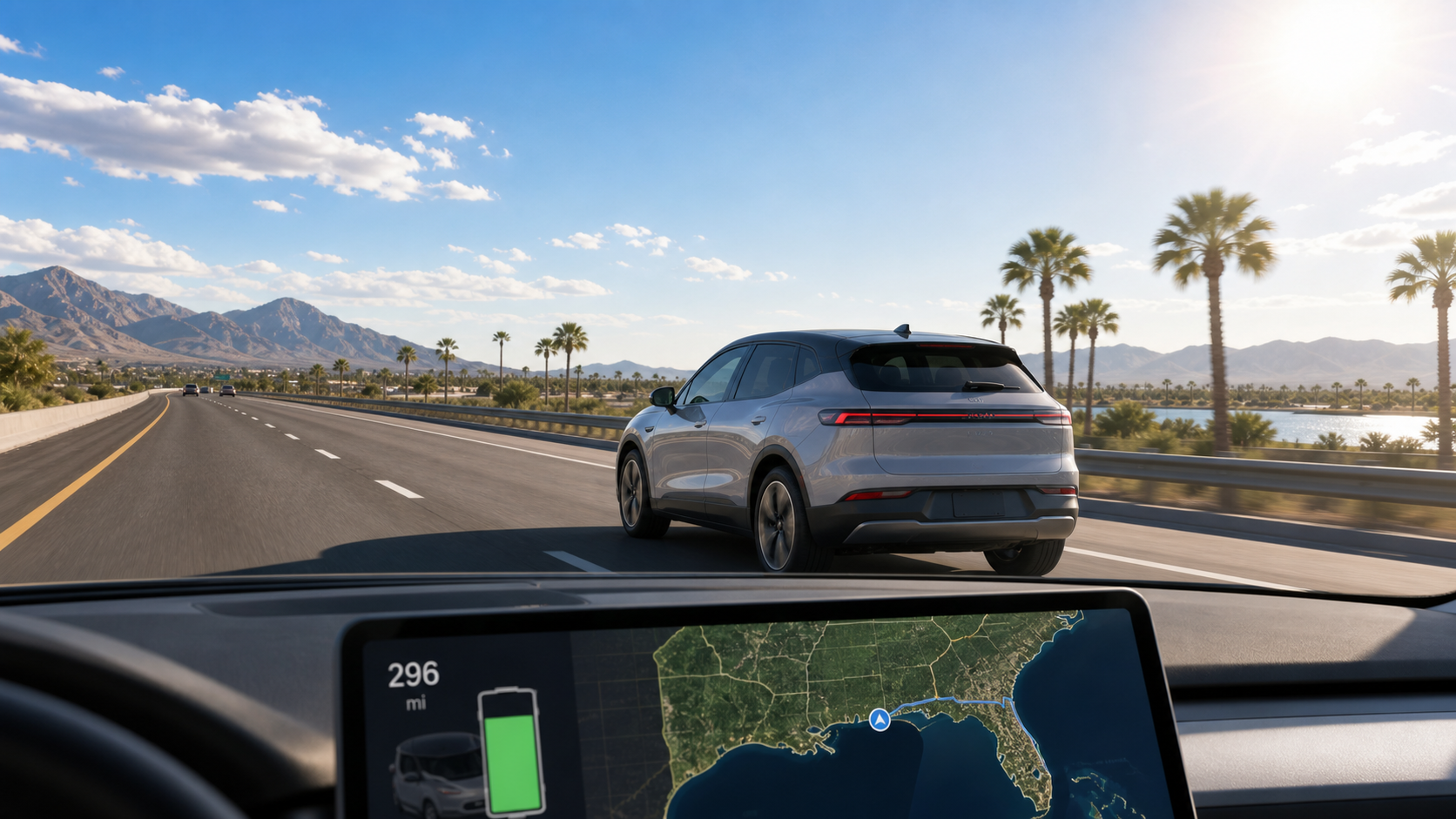
EV range is not just a battery number on a window sticker. Weather, road conditions, speed, and terrain can all change how far an electric vehicle goes in normal use.
Green Car Reports covered Vaisala's EV range analysis, which looked at weather and road conditions across the Lower 48 states. Vaisala's own 2026 EV Range Report points to strong weather-adjusted range conditions in states such as Arizona, Florida, Texas, and Louisiana.
Why warmer states can help
The central issue is cold-weather loss. Batteries are less efficient in severe cold, cabins require heat, and winter road conditions can add load. That combination can reduce real-world range enough for drivers to notice.
Warmer Southern states often avoid the worst of that winter penalty. Extreme heat can still affect efficiency, especially when air conditioning is working hard, but the analysis suggests cold weather is the bigger range hit in many comparisons.
Range is still local
A favorable state ranking does not guarantee that every Southern driver will see excellent range. Highway speeds, hills, headwinds, heavy rain, tire choice, payload, and charger spacing can all change the result.
Long interstate trips through Texas, Arizona, or Florida can still use energy quickly if speeds are high and distances between stops are long. Local commuting at moderate speeds may look very different from an 80-mph highway trip with luggage and passengers.
How shoppers should use the data
The useful lesson is regional planning. EPA range remains a consistent comparison point, but shoppers should translate it through their climate, commute, and road-trip habits.
Drivers in colder states may want more battery buffer, a heat pump, strong preconditioning, or more reliable home charging. Drivers in warmer states may place more weight on highway efficiency, air-conditioning load, and whether fast chargers are placed where long trips actually happen.
What to check before buying
Before choosing battery size, compare your normal daily miles with your worst-case day. Add winter or heat losses, highway speeds, terrain, and any regular towing or cargo load.
For many Southern shoppers, the result may be encouraging: a moderate-range EV could be easier to live with than expected. The key is not to assume the state average applies to every route. Match the vehicle to the way you actually drive.