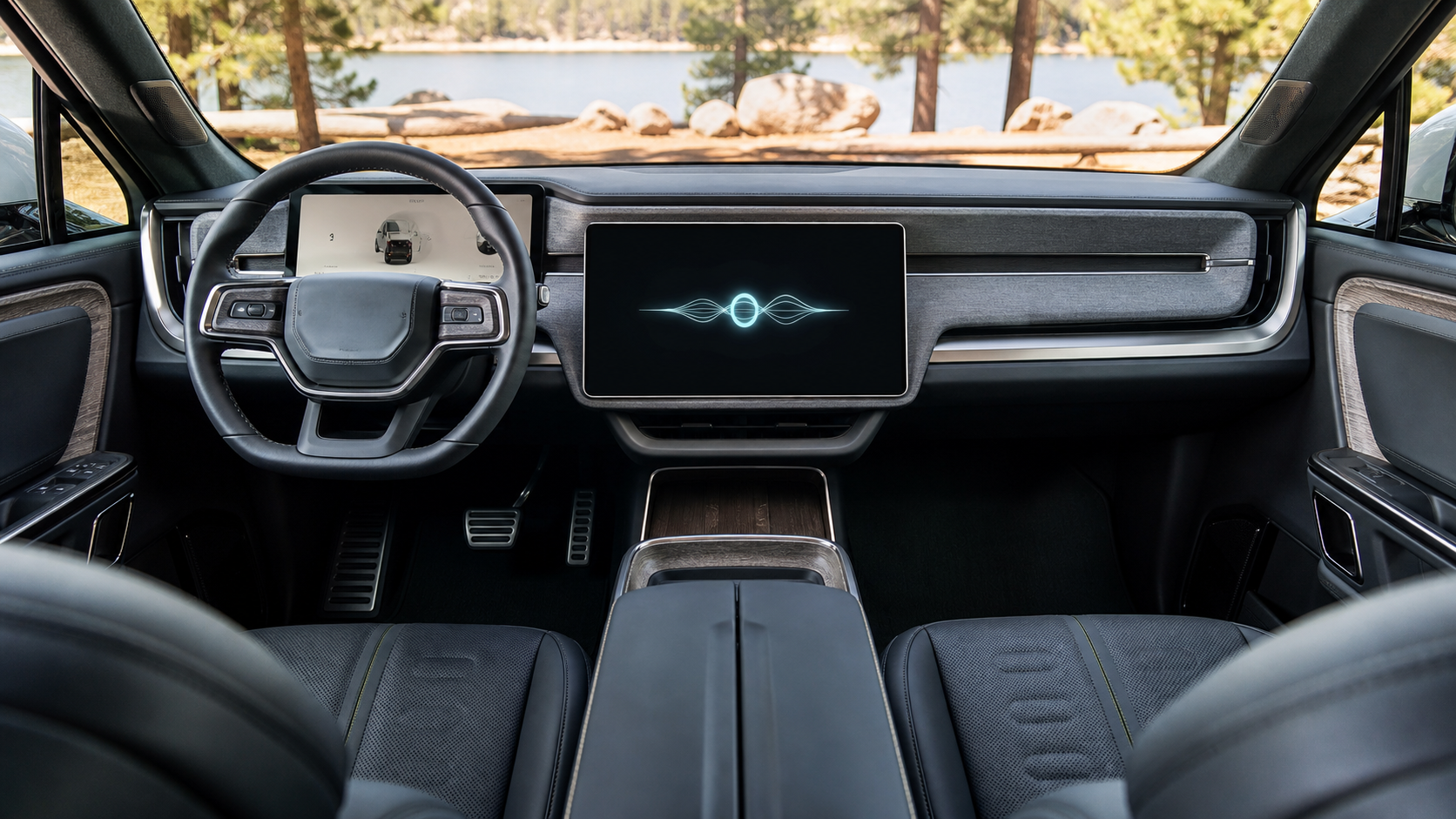
Rivian is adding a new software layer to its ownership experience with an in-vehicle voice assistant. The feature is starting with R1T and R1S owners and is expected to become part of the software story for R2 later.
InsideEVs reports that Rivian Assistant is rolling out through the company's latest software update. Rivian Wave's release-note coverage also ties the feature to version 2026.15, giving owners a clearer view of when the assistant enters the vehicle experience.
What is changing
The assistant is meant to give drivers a more natural way to interact with the vehicle. In practice, the value will depend on which commands it supports, how quickly it responds, and whether it works better than tapping through menus on the center screen.
Voice control can be useful when it handles common requests cleanly. Climate, navigation, media, vehicle settings, charging information, and ownership questions are all areas where a good assistant could reduce distraction.
Why it matters for Rivian
Software is part of Rivian's brand promise. The company sells vehicles around adventure hardware, but the daily ownership experience increasingly depends on over-the-air updates, route planning, charging integration, driver-assistance features, and cabin interfaces.
That makes Rivian Assistant more than a novelty. If it works well, it could make R1 vehicles feel more polished and give R2 shoppers confidence that Rivian's lower-priced SUV will not feel like a stripped-down product.
The feature still has to prove itself
The risk is that voice assistants can disappoint when they are slow, too limited, or unreliable. A feature that only works for a narrow set of commands may not change how owners use the vehicle.
Rivian will need to show that the assistant improves with updates and handles real owner requests without becoming another screen-based feature drivers ignore.
What shoppers should watch
Current R1T and R1S owners should watch whether the assistant meaningfully reduces menu diving. R2 shoppers should watch the same feedback because the software experience will matter when Rivian tries to reach a wider audience.
The strongest sign will be owner reports after everyday use, not the launch announcement itself. Speed, reliability, command coverage, and distraction risk will decide whether Rivian Assistant becomes a real advantage.